A Failed COP31 and the People’s Climate Summit Escalating the Struggle
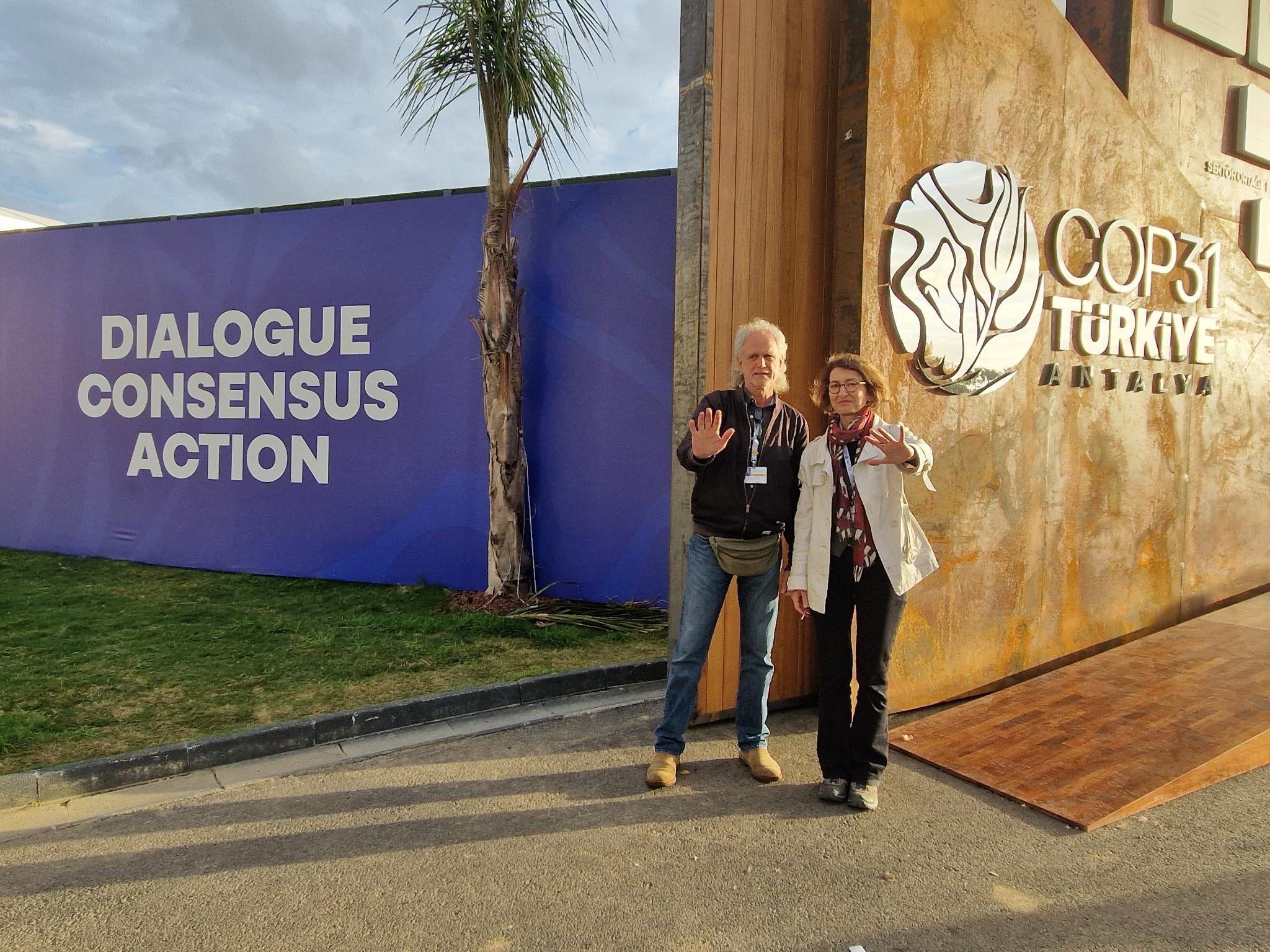
By Pinar Demican
Shaped by an unusual co-presidency model between Türkiye and Australia, COP31 was promoted as an “Implementation COP” meant to bring pledges down to the ground, and lasted two full weeks, the longest summit in UN climate history. From November 9 to 20, the city of Antalya was focused on COP31 amid grand promises. Yet after twelve days of negotiations and nearly fifty hours of overtime, there was neither a concrete outcome nor a roadmap for phasing out fossil fuels. What remained were only billions of liras in wasted resources, lost critical time, and Indigenous peoples whose futures are left at the mercy of collective decisions made around the table by global powers as rising sea levels threaten to submerge their lands.
COP31 took place under the shadow of a governance and coordination crisis created by the first-ever co-presidency model between Türkiye and Australia. Although it opened claiming to be an “implementation summit,” it closed by throwing the door wide open to false solutions like nuclear power and carbon capture.
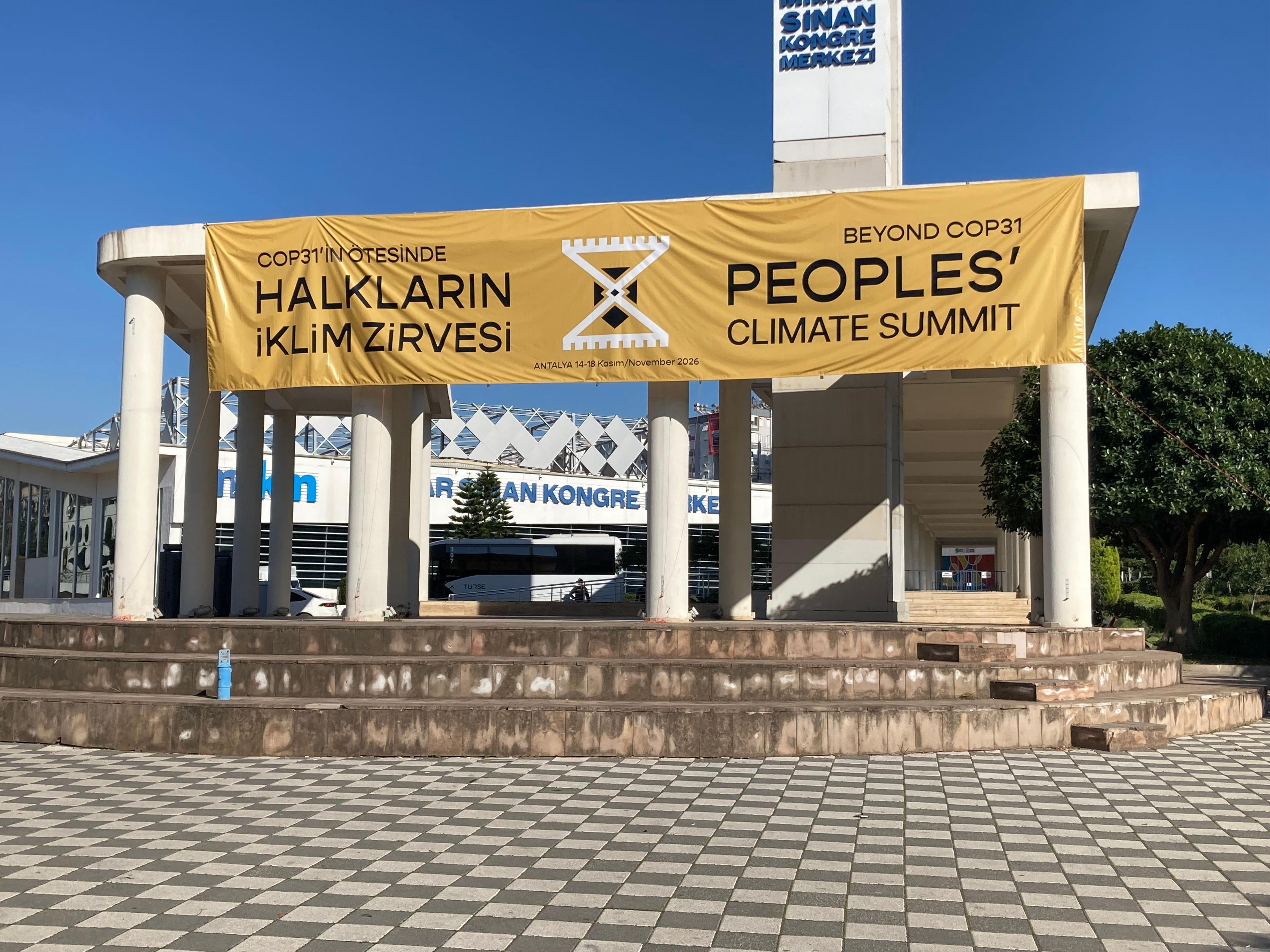
Yet just outside the isolated halls of the Blue Zone, the People’s Climate Summit (PCS), held at the Antalya Mimar Sinan Congress Center, put forward the real agenda of those defending life against these false solutions of capital and authoritarian regimes.
The COP31 negotiations were blocked at four main breaking points: the erasure of a fossil fuel phase-out from the texts, the promotion of technologies such as carbon capture and storage (CCS), the deadlock in climate finance, and political interference in climate science data.
Removal of Coal, Oil, and Gas from the Text: Under pressure from fossil fuel–producing states led by Russia and Saudi Arabia, references to coal, oil, and gas in the draft decision were left out. Many countries rejected the cover decision known as the “Antalya Pact” at the final closing plenary because it turned its back on the reality that humanity is crossing the 1.5°C threshold and on the need to phase out fossil fuels.
Technological Distractions and the CCS Trap: Negotiations tried to fill the gap left by the absence of a fossil fuel phase-out with technological promises that delay emission reductions. Attempts to scale up carbon capture and storage (CCS) projects to the “billion-ton” level by 2035 are simply a dangerous distraction meant to extend the lifespan of fossil fuel production and consumption.
Climate Finance and Historical Responsibility: While Global South countries struggling with the devastation of extreme weather events and Indigenous peoples whose lands face disappearance demanded urgent and accessible finance for adaptation, the Global North’s evasion of its historical responsibility prevented any result. Discussions on tripling adaptation finance by 2035 failed to produce a concrete timeline or a fair payment plan.
Europe’s Hypocritical Role: During the negotiations, European Union countries acted as the hero by leading the “progressive coalition” against fossil fuel defenders. Yet when it came to fulfilling their obligations on a just transition and adaptation finance for the Global South, they were among the main actors blocking the process.
The Nuclear Illusion and Authoritarian Greenwashing
One of the major issues at COP31 was the nuclear lobby using the summit to gain legitimacy. At the summit, organizers announced that the number of countries signing the declaration to triple nuclear energy capacity by 2050 had reached 39. In the corridors and pavilions, just as at previous COPs, the nuclear lobby relied on worn-out greenwashing propaganda to downplay radioactive risks, most notably the well-known “banana radiation” comparison, which equates radiation around a nuclear power plant to the potassium-40 in an ordinary banana.

However, the lobby’s one-sided propaganda did not go unchallenged inside the Blue Zone either. During actions held inside the summit venue, the Don’t Nuke the Climate network voiced the realities of nuclear power and made clear that nuclear is not a solution to the climate crisis. Ahead of COP31, a petition launched by the No Nukes Asia Forum also resulted in a joint statement signed by over 100 civil society organizations, emphasizing that nuclear power is not a climate solution; instead, it is a problem.

The nuclear energy issue was also carried into a UN side event. At our official UN side event titled “Nuclear Power and Other False Solutions to the Just Energy Transition: Fukushima+15, Chernobyl+40,” we deciphered this narrative directly inside the negotiation center.

At this side event, drawing on empirical data and field experience, we laid out the realities of Fukushima, the public resources allocated to SMR technology in South Korea, and how artificial intelligence is being instrumentalized to justify tripling nuclear capacity. We demonstrated that due to construction timelines spanning decades, nuclear power plants cannot contribute to urgent emissions reductions, and instead swallow billions of dollars in public funds that should go toward renewable energy and energy efficiency; with the Turkey example, we also argued that authoritarian regimes gain momentum due to the very nature of nuclear energy. Across presentations ranging from Fukushima to Rooppur and Akkuyu, and from uranium mining to the unresolved problem of radioactive waste and security risks heightened by wars, we put on record that the true cost of the nuclear industry is offloaded onto ecosystems and local communities.
However, for host country Türkiye, the picture amounts to little more than authoritarian greenwashing. Trying to ease the squeeze created by macroeconomic crisis and foreign exchange bottlenecks through international green finance flows, the government delivers “1.5 degrees” and “zero waste” messages from the COP31 podium while continuing coal subsidies and opening agricultural land and olive groves to plunder by energy and mining companies. Imposed in an environment where public nuclear research memory has been dismantled, and lack of oversight has become the norm, nuclear projects like Akkuyu—and others like it—are not an ecological solution, but a “nuclear gamble” that dispossesses local communities and mortgages the future. (Seehttps://www.greeneuropeanjournal.eu/cop-31-resisting-erdogans-authoritarian-greenwashing/). Where even renewable energy investments are turned into a new wave of rural dispossession through state coercion and law enforcement blockades, it is not possible to speak of energy democracy.
The People’s Climate Summit: Building the Material Conditions for Another Life
Directly facing the corporate lobbying and diplomatic deadlock in the Blue Zone, the People’s Climate March, where thousands from different regions and struggles gathered and filled the streets of Antalya with protest, turned that street energy into a shared program inside the halls of the People’s Climate Summit (PCS) from November 14 to 18. The gathering brought together those affected by the climate crisis. It included workers, peasants, small producers, Indigenous peoples, women, youth, ecology movements, trade unions, and peace advocates, who built not just a protest, but a shared line of struggle.
One of the key parts of this shared line on nuclear energy was the panel organized by the Don’t Nuke the Climate network.

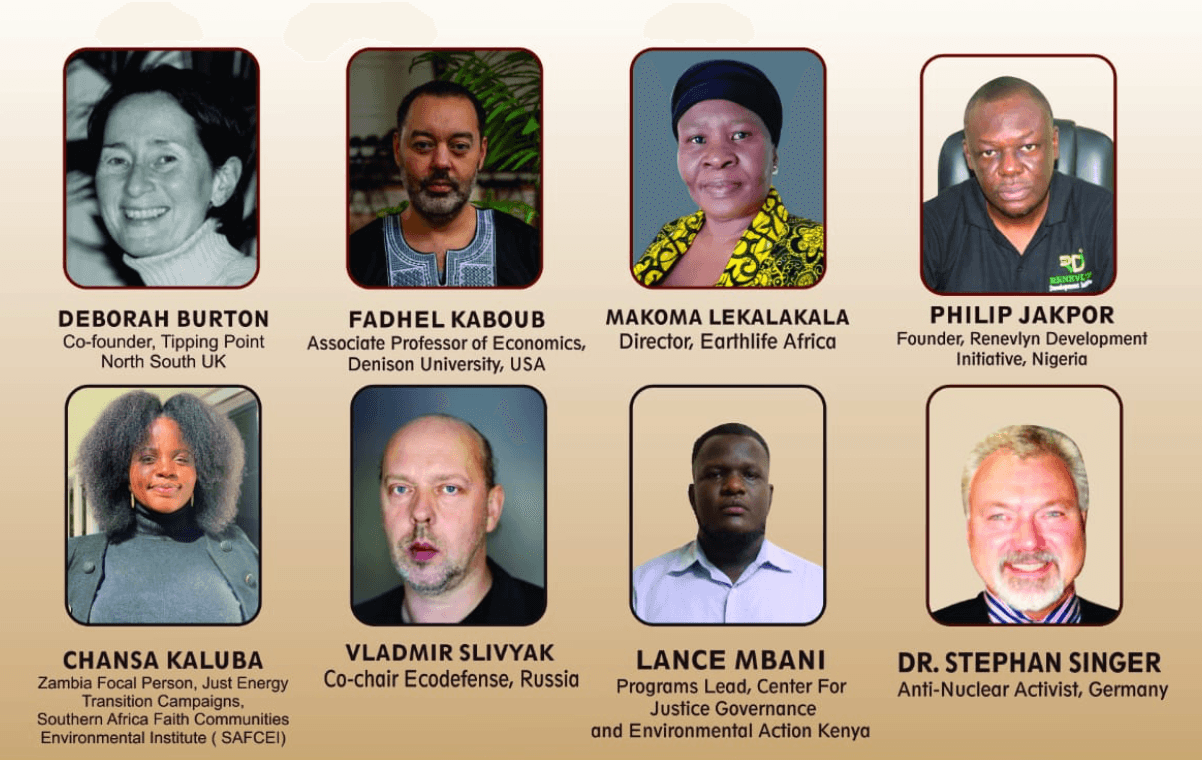
Held on the 40th anniversary of the Chernobyl disaster and the 15th anniversary of the Fukushima disaster, this meeting brought together activists and researchers from different regions. With data and field experience, we showed that the global claim of nuclear energy being a “clean and safe climate solution” is false. In the panel, the opening explained that the nuclear fuel chain gives the big picture for discussing nuclear energy and climate. Ayumi Fukakusa from Japan FOE shared Fukushima facts and experiences about living within a nuclear disaster. Then Günter Hermeyer from Peoples Organization Gorleben shared insights and problems around nuclear waste, indicating there is no real solution for nuclear waste. We also had Makoma Lekalakala from Earthlife Africa share the anti-nuclear struggle from South Africa. And Maria Sotiropoulou from IPPNW Greece spoke about nuclear weapons and climate within the fuel chain. As the 5th speaker, Karen Hallows from Peace Boat explained nuclear risks from a feminist perspective. She also showed that the nuclear lobby’s clean energy claims are backed by unscientific manipulation on the banana-radiation nexus. Finally me as the coordinator of nukleersiz.org explained that, alongside the radiation effects that were already covered along the nuclear fuel chain, carbon emissions and water use also indicates how nuclear is not a climate solution but an additional problem, and laid out the risks of the projects in Türkiye.
In the panel, we pointed out that nuclear plants cannot help cut emissions quickly because building them takes decades. Worse, they take billions of dollars in public money away from renewable energy and energy efficiency. From Fukushima to Akkuyu, from uranium mining to unresolved radioactive waste, and to rising security risks during wars, the discussion showed that ecosystems and local communities carry the real cost of the nuclear industry.
The perspective of the PCS rejects mainstream approaches that see the climate crisis only as a technical carbon accounting problem:
Systemic Root Causes: We cannot separate the climate crisis from how capitalist production works. It treats nature as a resource for unlimited exploitation and human labor as an input whose cost can always be cut. Today, the clash between ongoing capital accumulation, the planet's ecological limits, and people's right to a decent life has reached a deep rupture.
1.5°C and Just Mitigation: Mitigation targets cannot be traded away for corporate profits, carbon markets, or expensive, slow, and dangerous technologies like CCS and nuclear. We must update targets around what nature and people need, and firmly push to stay within the 1.5°C limit and gradually return below it.
Local-to-Global Solidarity: The people’s tribunals in PCS sessions and the discussions by the Don’t Nuke the Climate network under “Nuclear for Climate?” showed a shared reality from Mersin to Fukushima and from Eastern Europe to the Pacific islands: nuclear plants and fossil fuel projects are two sides of the same capital system.

The clearest lesson from Antalya is simple: those who caused the climate crisis will not solve it behind closed doors. The real solution comes from cross-border solidarity among those who defend nature and labor, women protecting living spaces, Indigenous peoples, and workers, and their will to start building the material conditions for another way of life today.