
Gorleben 50 years Anniversary.
In 2027, the anti-nuclear resistance movement in the Wendland will celebrate its 50th anniversary.
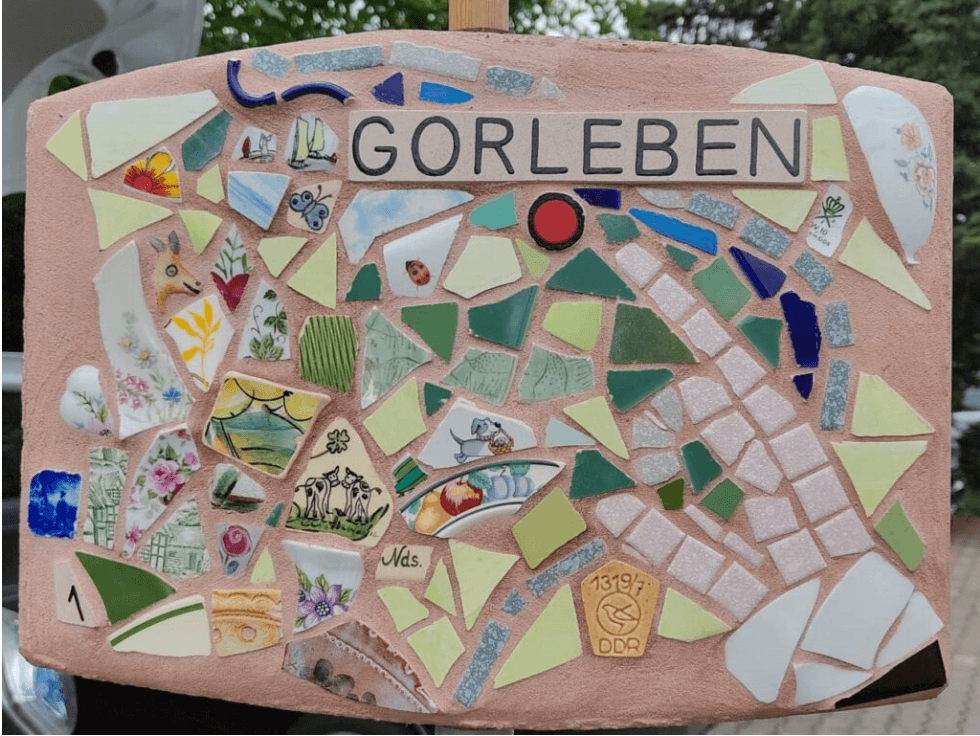
Gorleben 50 years Anniversary
On 22 February 1977, Gorleben was designated as the site for a massive nuclear facility. The planned reprocessing plant was blocked, followed by further Castor transports and, ultimately, the nuclear waste repository. The disputes surrounding Gorleben have become a lesson in democracy in the history of the Federal Republic. In 2027, the anti-nuclear resistance movement in the Wendland region will celebrate its 50th anniversary.
A summary by Anna Gäde and Jan Becker
The Background & the Consequences
In February 1977, the village of Gorleben on the River Elbe became famous overnight – as the site for a gigantic nuclear waste disposal centre. Opposition to the plan began to take shape just a few days later. Over the following decades, this opposition served as a counterbalance to misguided energy policy decisions and as a driving force for democracy.
When Ernst Albrecht, Minister-President of Lower Saxony, designated Gorleben as the site for a Nuclear Waste Repository (NEZ) in February 1977, it sparked an unprecedented wave of protest. What began as a purely political decision, lacking any scientific justification and made without consulting the local population, developed into one of the most defining social conflicts in post-war German history.
The plan was to build a gigantic nuclear waste processing plant – a decision that appeared to be a calculated move, both topographically and politically: the deepest countryside, right on what was then the inner-German border, supposedly economically deprived and staunchly conservative. But this calculation backfired. It overlooked the local people and underestimated their resilience and creativity.
The resistance brought together groups that had previously had little in common. Local farmers protested side by side with civic initiatives, left-wing activists, artists and environmentalists. The occupation of drilling site 1004 in May 1980 and the proclamation of the Republic of Free Wendland are still regarded today as milestones in alternative ways of life and forms of protest.
The transport of highly radioactive waste from the mid-1990s onwards led to the largest police operations in the history of the Federal Republic of Germany. The images of tens of thousands of people chaining themselves to the tracks in freezing temperatures were etched into the nation’s collective memory. The Wendland region became the focal point of the German anti-nuclear movement, which, by international standards, was characterised by exceptional continuity and broad social support.
Without the Wendland, history would have taken a different course
The sustained pressure from the Wendland gradually forced politicians to rethink their position. Without the tenacious resistance in Gorleben, Germany’s nuclear phase-out – with all reactors having been shut down since 2023 – would have been almost inconceivable in its current form.
In 2020, the historic U-turn finally came: Gorleben was officially ruled out of the search for a future final repository due to geological shortcomings.
Since then, the salt dome has been refilled with salt – a monumental success for the movement. The Gorleben resistance played a decisive role in the nuclear phase-out and ultimately led to a fresh start in the search for a final repository, based on a science-led and legally regulated process.
The conflict has left a lasting mark on the Lüchow-Dannenberg region. A distinct political and cultural identity has emerged from the resistance. The culture of public debate and participation in Germany has been transformed by Gorleben.
Today, society demands transparency and science-based criteria for major government projects – which can be seen as a direct lesson learnt from the political missteps of that time regarding the salt dome. The anti-nuclear movement not only shaped energy policy but also had a lasting influence on Germany’s political culture: it established protest and civil society resistance as legitimate components of a vibrant democracy and fostered the development of new forms of participation.
Protest is a necessary part of democracy
The history of protest in the Wendland region is closely linked to the struggle for fundamental democratic values such as the rule of law, public participation and political transparency. It demonstrates how civic engagement can influence and further develop democratic processes. And it makes it clear that protest is not only a legitimate but also a necessary component of a vibrant and evolving democracy.
Examining the Gorleben conflict offers the opportunity to engage with the differing perspectives of citizens’ initiatives, politicians, business, the civil service and the courts.
This ability is a fundamental prerequisite for forming critical opinions and participating in society – particularly at a time when anti-democratic movements are gaining ever more support.
Decisions of the century regarding technology and the environment must never be driven by party-political calculations or short-term opportunism. Perhaps the most important political lesson is the failure of the so-called ‘top-down’ approach. The new Site Selection Act for a nuclear waste repository, introduced in 2017, calls for comprehensive public participation, transparency and scientific criteria from the outset, in order to avoid mistakes such as those made in Gorleben. Anyone talking today about infrastructure projects, the energy transition or social participation is – consciously or unconsciously – building on the foundations laid in the Wendland region.
The anniversary of the Gorleben protest serves as a reminder of a turning point.
The 50th anniversary of this movement is not merely a regional celebration – it is a commemoration of a turning point that profoundly and irreversibly transformed the political culture of the Federal Republic of Germany. The historical significance of this conflict extends far beyond nuclear policy. Gorleben proved that, in a modern democracy, large-scale projects can no longer be pushed through behind closed doors against the explicit will of the population. This shows that those who speak out and get involved can help shape our society even beyond the ballot box. In times of populism and disillusionment with democracy, this realisation takes on great significance for the capacity of our democracy to renew itself. Furthermore, even though the anti-nuclear movement was successful in bringing about the phase-out of nuclear energy and the end of Gorleben as a final repository site, the debates surrounding the final disposal of radioactive waste and the future of nuclear energy remain as relevant as ever.
Against this backdrop, the history of the Gorleben conflict can provide important insights. After 50 years, Gorleben shows us that history is not only made in the capital cities, but sometimes also on dusty roads or freezing cold railway tracks. It is important and necessary to mark this anniversary in order to keep these lessons alive and to preserve a democratic culture of debate for future generations.

